Every commercial building standing today started as an empty lot, a set of drawings, and a decision someone had to make, build new, or work with what's already there. If you're staring down that same decision for a project in Los Angeles, you've probably already discovered that "ground up construction" gets thrown around a lot without much explanation of what it actually involves.
This guide fixes that. Whether you're developing a retail space, an office building, a warehouse, or a mixed-use property, you'll get a clear picture of what ground up construction really means, how the process unfolds from empty lot to open doors, and what tends to trip projects up along the way.
What Is Ground Up Construction?
Ground up construction means building a commercial structure entirely from scratch, starting with raw or cleared land and ending with a fully finished, occupiable building. There's no existing structure to renovate and no shell to work around. Every system, from the foundation to the roofline, gets designed and built new.
This is different from a tenant improvement or a renovation, where you're modifying an existing building to fit a new purpose. Ground up construction gives you a blank slate, which is powerful, but it also means every decision, from site grading to structural design to utility connections, has to be made from zero rather than adapted from something already in place. You can see how Snow Construction approaches this on our ground-up construction services page.
For commercial developers, this route usually makes sense when no existing building fits the layout, capacity, or location the business needs, or when long-term ownership and full design control matter more than a faster, cheaper renovation.

The Ground Up Construction Process, Step by Step
The ground up construction process follows a fairly consistent sequence across most commercial projects, even though the timeline and complexity shift depending on the building type and local jurisdiction.
Site Selection and Due Diligence
Before anything gets designed, the site itself has to be evaluated: soil conditions, drainage, access to utilities, zoning restrictions, and environmental factors. A site that looks perfect on paper can carry hidden costs if the soil requires special foundation work or the parcel isn't zoned for the intended use.
Design and Entitlements
Architects and engineers translate the business's needs into drawings, while the development team works through entitlements: the approvals required to legally build on the site, including zoning variances, environmental reviews, and design approvals from local planning boards.
Permitting
Once designs are finalized, building permits are submitted to the local jurisdiction. In Los Angeles, this stage runs through the Department of Building and Safety, and it's one of the most common places where commercial ground up construction projects stall while waiting on approvals.
Site Preparation and Foundation
Crews clear the land, grade it, and install the foundation. This is also when underground utilities like water, sewer, and electrical conduit typically go in, before anything is built on top of them. This stage overlaps heavily with foundation and framing work; our related post on finding reliable concrete foundation contractors in Los Angeles covers more on getting this part right.
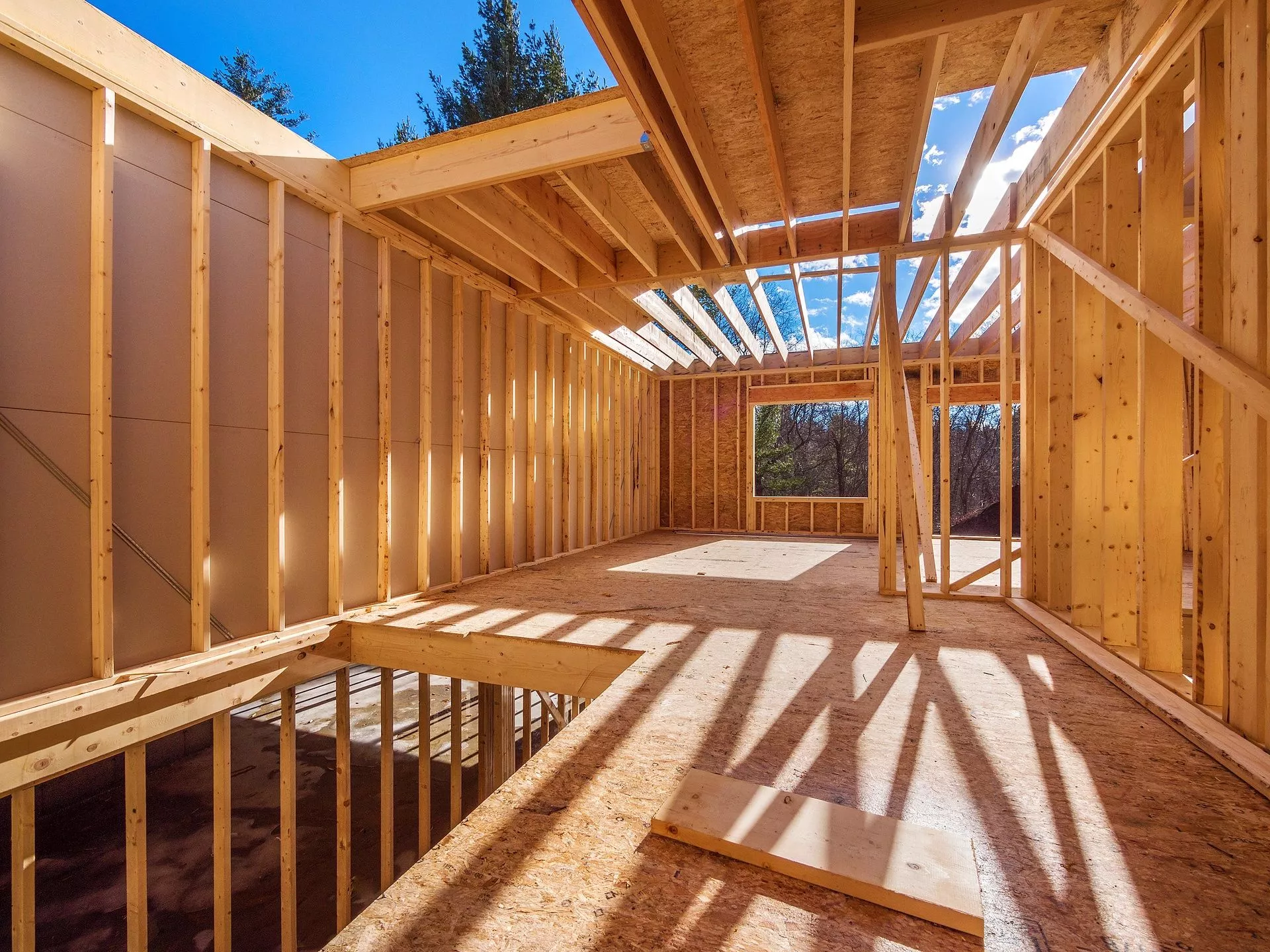
Structural Framing
The building skeleton goes up next: steel, concrete, or wood framing, depending on the design. This is the stage where a project starts to look like an actual building rather than a construction site. If you're deciding between materials, our comparison of steel framing vs. wood framing breaks down the tradeoffs. Framing also has to pass inspection before work continues, and we've written about what happens during a framing inspection if you want the details.
MEP Installation
Mechanical, electrical, and plumbing systems, meaning the building's HVAC, wiring, and pipes, get installed within the frame before walls and ceilings close everything in.
Interior Build-Out and Finishes
Drywall, flooring, fixtures, paint, and finish carpentry bring the space to its final look. For commercial buildings, this stage often includes tenant-specific finishes if the building is being built for a known occupant.
Final Inspections and Occupancy
Local building inspectors sign off on the completed structure, and the project receives a certificate of occupancy, clearing the way for the business to move in and operate legally.
Ground Up Construction vs. Renovation: Which Makes Sense for Your Business?
Not every commercial project needs a new building. Renovating or repurposing an existing structure can be faster and cheaper, but it comes with its own tradeoffs. For a deeper look at picking the right partner for either path, see our guide on choosing the right commercial construction contractor in Los Angeles.
Factor | Ground Up Construction | Renovation / Retrofit |
Design flexibility | Full control over layout and systems | Limited by existing structure |
Timeline | Generally longer, more phases | Often shorter, fewer approvals |
Long-term cost efficiency | Higher upfront, but newer systems and code compliance built in | Lower upfront, but may need future upgrades |
Site requirements | Requires available, buildable land | Requires a suitable existing building |
If your business needs a specific footprint, capacity, or location that doesn't exist in the current market, ground up construction is often the only real path forward. If a suitable building already exists and just needs updating, renovation is usually the more efficient choice.
How Commercial Ground Up Construction Compares to Building a House From the Ground Up
Many business owners come into a commercial project with a mental reference point: building a house from the ground up. The comparison is useful, but the differences matter.
Building a house from the ground up typically involves a single-family structure, residential zoning, and a design process built around one household's needs. Commercial ground up construction operates on a different scale entirely, with larger structural loads, more complex MEP systems, ADA compliance, fire and life-safety codes, and often multiple stakeholders like investors, tenants, and lenders who all need to sign off on decisions.
The sequence of steps is similar to building a house from the ground up: site prep, foundation, framing, systems, finishes. But commercial projects layer in far more regulatory review and coordination between trades. If you've been through building a house from the ground up before, you already understand the rhythm of the process; commercial work just multiplies the moving parts. Snow Construction handles both sides of this, from custom homes and ADUs to full commercial builds, so the transition between the two is something we manage regularly.
Common Challenges in Commercial Ground Up Construction
Financing Complexities
Construction loans for ground up projects are structured differently than a standard mortgage or renovation loan. Lenders typically release funds in stages tied to construction milestones, which means cash flow planning has to be tight throughout the ground up construction process.
Timeline Overruns
Weather delays, material lead times, and labor availability can all push a schedule. Building in buffer time during planning helps prevent a tight opening date from becoming a missed one.
Zoning and Entitlement Delays
Local approval processes vary widely across Los Angeles County, and this stage is one of the hardest to predict. Engaging with the municipality early, before finalizing designs, tends to reduce back-and-forth later. Working with a contractor who already knows the local requirements in your area, like our service area coverage in LA County, can shorten this stage considerably.
How Long Does Ground Up Construction Take?
Timelines vary widely based on building size, complexity, and how quickly permitting moves in a given jurisdiction. Smaller commercial buildings can move through the entire ground up construction process in under a year, while larger or more complex projects, especially those requiring extensive entitlements, can stretch well beyond that. Anyone budgeting a project should treat the permitting and entitlement phase as the least predictable part of the schedule and plan accordingly.
Choosing the Right Team for Your Ground Up Construction Project
The success of a ground up build depends heavily on the team behind it. Look for a general contractor and architect who have direct experience with your specific building type. A firm skilled in retail buildouts isn't automatically the right fit for an industrial warehouse. Ask to see completed commercial projects, not just renderings. You can browse examples of our work in the Snow Construction project portfolio, and get clarity upfront on how the team handles permitting delays, change orders, and budget overruns before you sign anything. You can also learn more about our background on the About Us page.
Final Thoughts
Ground up construction gives commercial owners something a renovation never can: a building designed entirely around the way the business actually operates. That freedom comes with more steps, more coordination, and more decisions along the way, but for many businesses, it's the only way to get a space that truly fits.
If you're weighing ground up construction against renovating an existing property, start with the site. Everything else in the process, from design to permitting to budget, follows from whether the land you're considering can actually support what you're trying to build. If you want a local team to walk the site with you, reach out to Snow Construction for a consultation.
Frequently Asked Questions
What does ground up construction mean for a commercial building?
Ground up construction means building a commercial structure entirely from scratch, starting with raw or cleared land and finishing with a fully completed, occupiable building. Every system, from the foundation to the roof, is designed and built new, rather than modifying an existing structure.
How long does the ground up construction process take in Los Angeles?
Timelines vary based on the building's size, complexity, and how quickly permits move through the local jurisdiction. Smaller commercial projects can move through the full process in under a year, while larger builds or those needing extensive entitlements often take longer.
What permits are required for ground up commercial construction in LA?
Commercial ground up projects in Los Angeles typically require zoning approval, building permits, and sign-off from the Los Angeles Department of Building and Safety, along with utility and environmental approvals depending on the site and building type. A contractor familiar with local requirements can help you avoid unnecessary delays.
How much does ground up commercial construction cost?
Costs depend on the building size, materials, site conditions, and finish level, so there's no single number that applies across projects. The most reliable way to get an accurate figure is a site-specific estimate. You can request a free estimate from Snow Construction to get numbers based on your actual project.
What's the difference between ground up construction and a tenant improvement?
Ground up construction builds an entirely new structure from an empty site. A tenant improvement modifies the interior of an existing building to fit a new tenant's needs, without touching the building's core structure or shell.