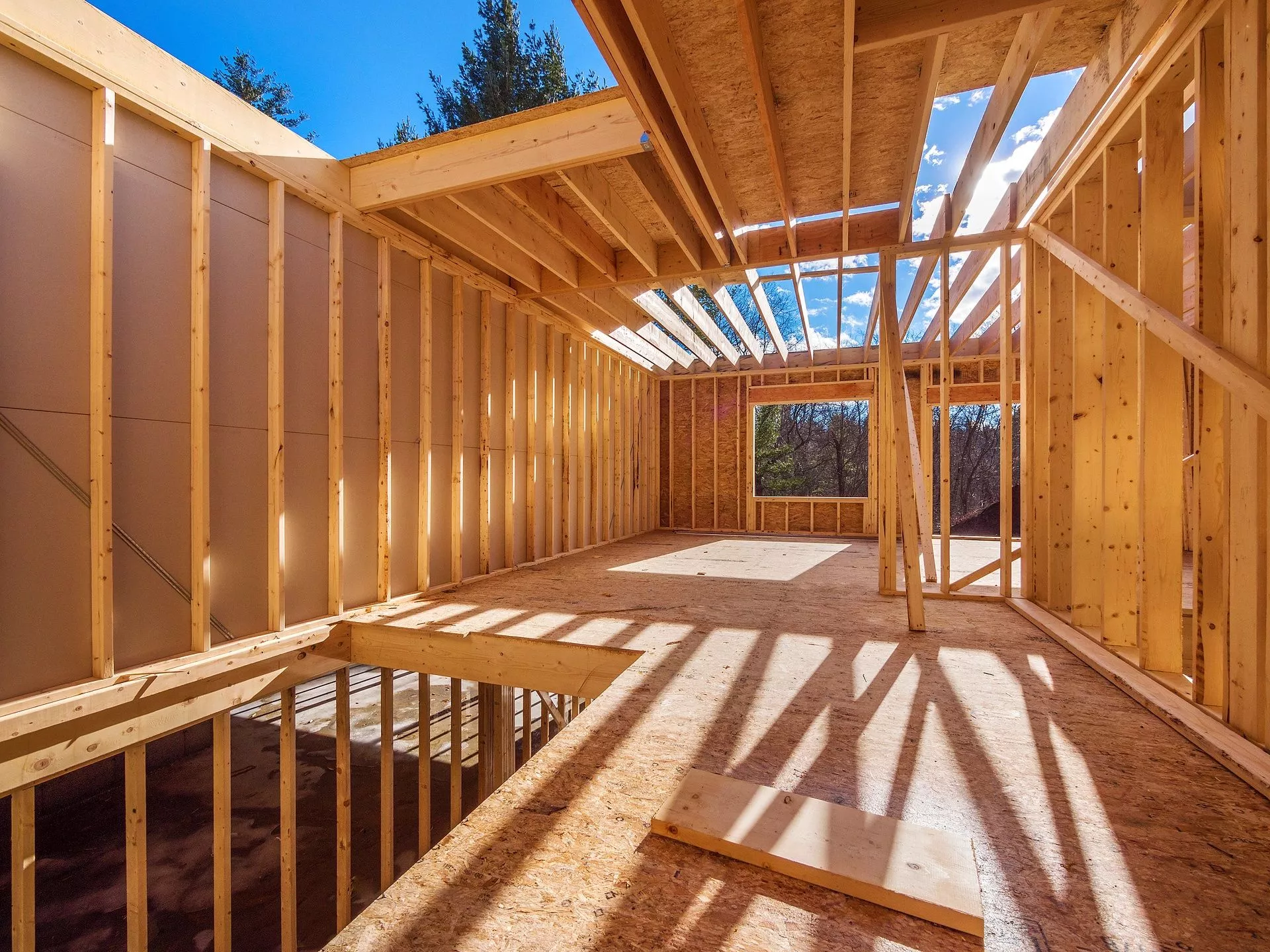
Steel framing and wood framing are the two dominant structural systems used in residential and commercial construction - and the better choice depends entirely on your project type, budget, location, and long-term goals. Steel framing construction offers superior strength, dimensional consistency, and resistance to moisture and pests, while wood framing costs less upfront and remains the faster, more familiar option for most residential builders.
In short
Wood framing is usually better for lower upfront cost and residential flexibility.
Steel framing is better for moisture resistance, fire resistance, and long-term durability.
What Is the Core Difference Between Steel Framing and Wood Framing?
The fundamental difference is the material used to construct the structural skeleton of a building. Wood framing uses dimensional lumber - typically 2x4 or 2x6 softwood studs - while steel framing construction uses cold-formed steel (CFS) channels and tracks that are manufactured to precise, consistent dimensions.
That difference in material drives a cascade of downstream differences in cost, labor, performance, and long-term maintenance that every builder and homeowner should understand before committing to a structural system.

How Does Each Framing System Work Structurally?
Wood framing works through a network of dimensional lumber members - studs, joists, rafters, and beams - fastened together with nails and metal connectors to distribute structural loads down to the foundation. Steel framing construction uses a similar layout but replaces every lumber member with a cold-formed steel equivalent, fastened with self-drilling screws rather than nails.
Both systems can meet residential and commercial building codes across the United States, but they behave very differently under load, temperature change, moisture exposure, and seismic stress - which is why the choice between them matters.
How Do Steel Framing and Wood Framing Compare on Cost?
Wood framing is generally less expensive upfront than steel framing construction, with most residential wood framing running $7-$16 per square foot in labor and materials. Steel framing typically costs $9-$20 per square foot for the same scope, reflecting higher material costs and the more specialized labor required to work with cold-formed steel.
However, upfront cost is only part of the picture.
What Are the Long-Term Cost Differences Between Wood and Steel?
Over the life of a building, steel framing construction can reduce total ownership costs in several meaningful ways:
No pest damage - Wood is vulnerable to termites, carpenter ants, and other wood-boring insects. Steel is not. In termite-prone regions like the American South, Southwest, and coastal California, this alone can represent significant savings over a 20-30 year horizon.
No moisture-related warping or rot - Wood framing expands and contracts with humidity changes and can rot if moisture infiltration goes undetected. Steel doesn't rot, and cold-formed steel members won't warp, bow, or crown after installation - which means fewer callbacks and less remediation over time.
Insurance considerations - Some insurers offer reduced premiums for steel-framed structures due to their superior fire resistance rating compared to untreated wood. This varies by carrier and region, so verify with your insurer directly.
Maintenance and repair costs - Wood-framed structures typically require more structural maintenance over time, particularly in climates with significant humidity swings or pest pressure.
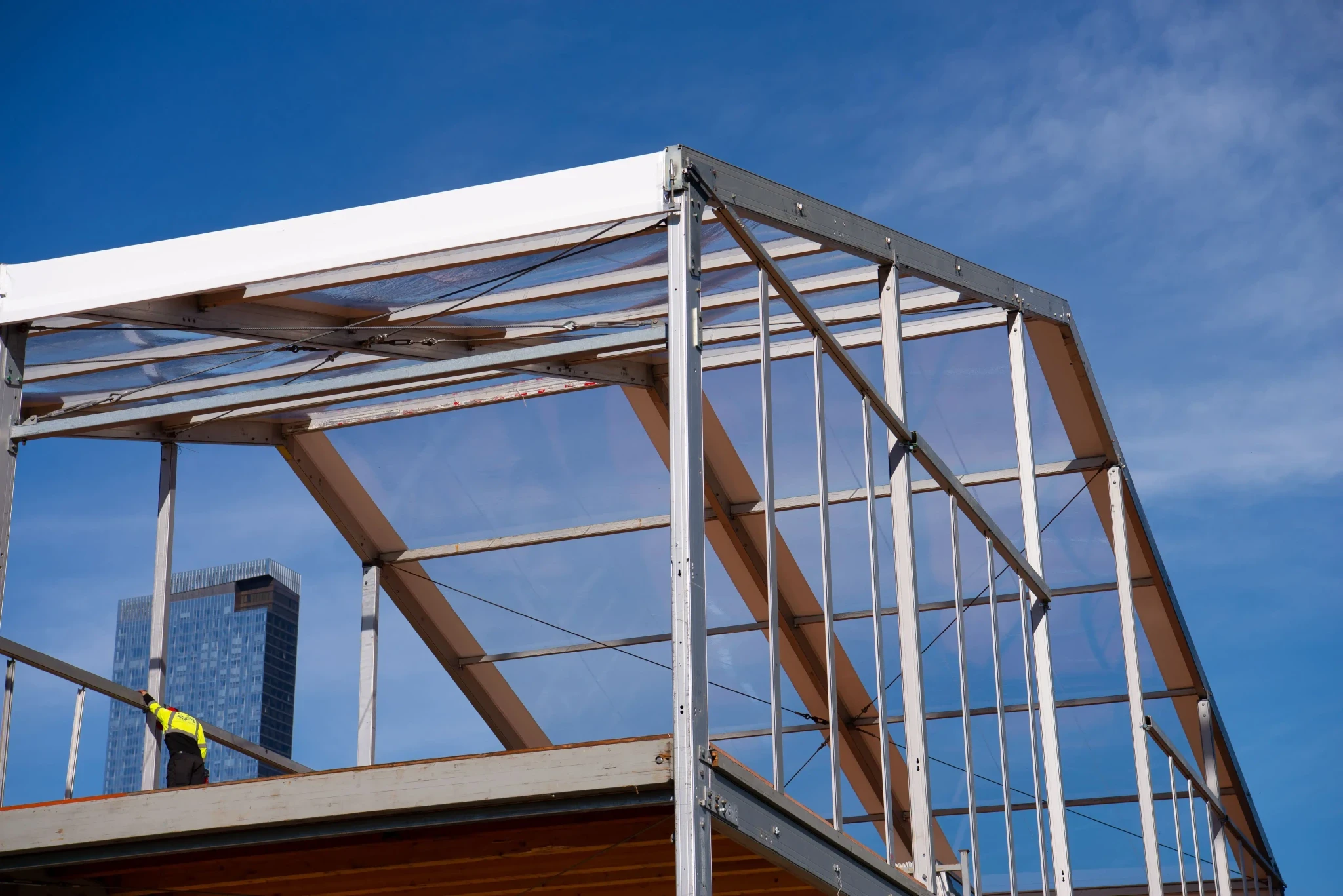
Which Is Stronger - Steel Framing or Wood Framing?
Steel framing is stronger than wood framing on a pound-for-pound basis. Cold-formed steel has a higher strength-to-weight ratio than dimensional lumber, meaning steel members can carry equivalent or greater loads at lighter weights. In high-wind zones, hurricane-prone coastal areas, and seismic regions like California, steel framing construction provides structural advantages that wood systems must compensate for through additional reinforcement.
How Does Each System Perform in Earthquakes and High Winds?
Steel framing construction performs exceptionally well under lateral loads - the kind generated by earthquakes and high winds - because steel members flex without fracturing. Wood framing handles seismic loads through shear walls and engineered panels, which work well but require more precise installation and ongoing inspection to maintain their rated performance.
According to FEMA post-disaster structural assessments, steel-framed buildings in seismic and hurricane events have consistently demonstrated lower rates of catastrophic structural failure compared to conventionally wood-framed structures of equivalent design. For projects in high-hazard zones, this performance difference carries real weight in the structural engineer's decision.
Does Steel Framing Resist Fire Better Than Wood?
Steel framing construction is non-combustible - steel does not ignite or contribute fuel to a fire. This gives steel-framed structures a meaningful advantage in fire resistance ratings compared to unprotected wood framing. However, it's important to note that steel loses structural integrity at high temperatures, which is why fire-rated assemblies (drywall, spray fireproofing) are still required in both systems. The distinction is that steel won't add fuel to the fire the way wood will.
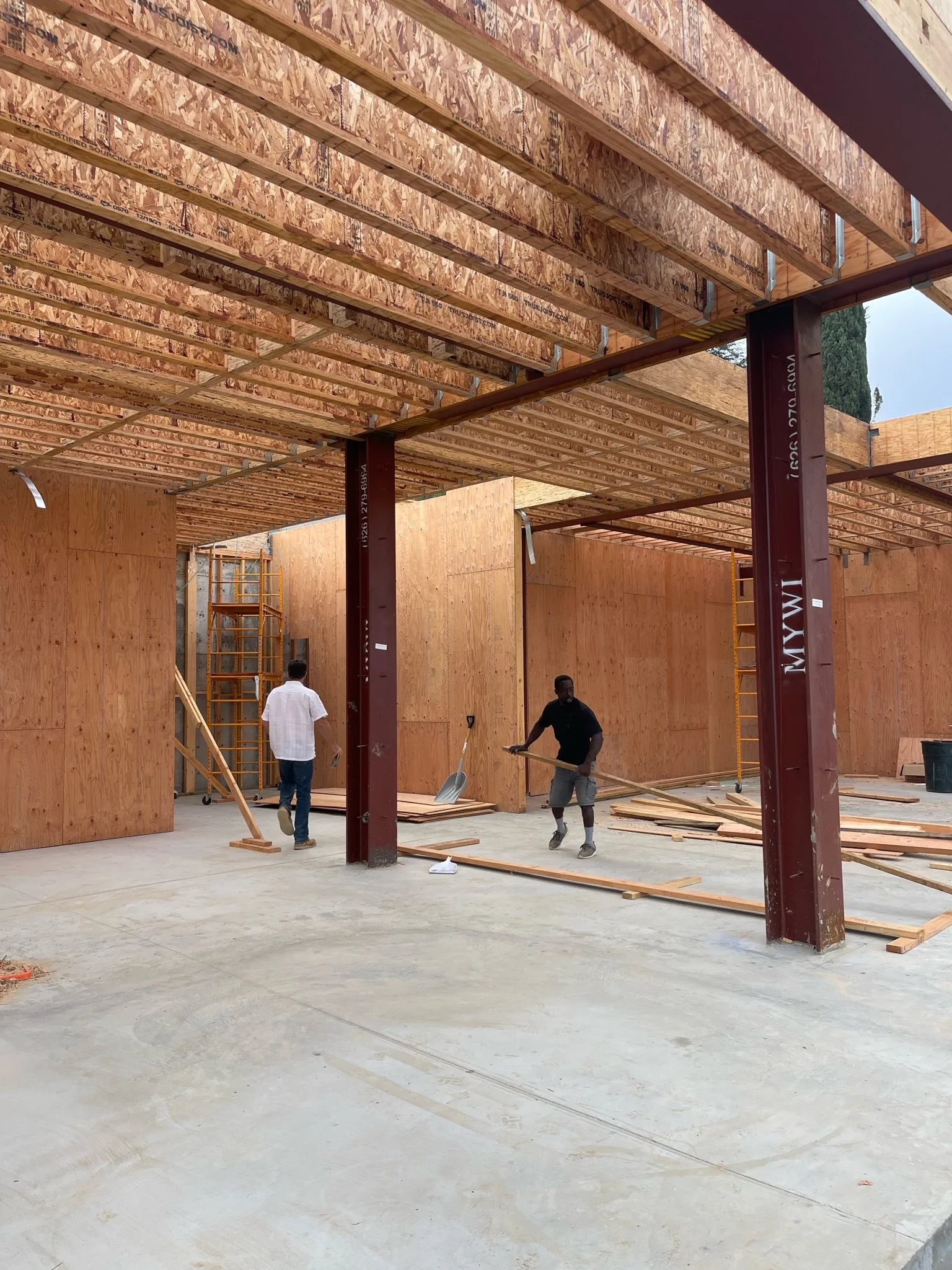
What Are the Practical Advantages of Wood Framing?
Wood framing remains the dominant system in U.S. residential construction for practical reasons that go beyond just cost. It's a system that virtually every residential contractor, subcontractor, and building inspector knows intimately - and that familiarity translates into faster builds, fewer coordination problems, and a wider labor pool to draw from.
Why Do Most Home Builders Still Prefer Wood Framing?
Most residential builders default to wood framing because:
Labor availability - The pool of experienced wood framers is vastly larger than steel framing crews in most U.S. markets. This keeps labor costs competitive and scheduling more flexible.
Ease of modification - Wood is easy to cut, notch, and modify on site without specialized tools. Running electrical, plumbing, and HVAC through wood-framed walls is faster and more straightforward than steel.
Thermal performance - Wood is a natural insulator. Steel is highly thermally conductive, which creates thermal bridging issues in steel-framed walls that require specific insulation strategies to mitigate.
Architect and designer familiarity - Most residential design software, span tables, and engineering references are optimized for wood framing. Steel framing construction requires cold-formed steel design software and engineers familiar with AISI standards.
Material availability - Dimensional lumber is stocked at virtually every building supply yard in the country. Cold-formed steel members require ordering from specialty suppliers in most residential markets.
Is Wood Framing Better for Custom Home Builds?
For custom residential construction - particularly complex architectural designs with curved walls, irregular floor plans, or highly customized interior layouts - wood framing offers more on-site flexibility. Changes and modifications during construction are faster and less costly to execute in wood than in steel, where every member is a manufactured product that may need to be reordered or refabricated.
Where Does Steel Framing Construction Make the Most Sense?
Steel framing construction is the preferred or required choice in several specific scenarios where its material properties provide clear advantages over wood.
What Project Types Are Best Suited to Steel Framing?
Commercial and multi-family construction - Steel framing is standard in commercial office buildings, retail, hotels, and multi-family residential above three stories. The combination of non-combustibility, dimensional consistency, and structural efficiency makes it the dominant choice at commercial scale.
Coastal and high-humidity environments - Projects within close proximity to saltwater or in persistently high-humidity climates benefit significantly from steel's immunity to moisture-related degradation that would compromise wood framing over time.
Termite-prone regions - In areas where subterranean termites are an active concern - the Gulf Coast, Florida, Hawaii, and parts of California - steel framing eliminates one of the most costly and disruptive long-term maintenance risks entirely.
Long clear-span applications - When a design requires wide open spans - retail floor plates, open-plan commercial offices, or large residential great rooms - steel framing construction can achieve longer spans at lighter member weights than engineered wood alternatives.
Fire-risk zones - In areas classified as Wildland-Urban Interface (WUI) zones across California, Colorado, and the Pacific Northwest, steel's non-combustible classification provides both a building performance advantage and, in some jurisdictions, a code compliance path that wood framing cannot match without additional treatment.
What Are the Disadvantages of Steel Framing Construction?
Steel framing is not the right choice for every project, and its disadvantages are worth understanding clearly before making a structural system decision.
Thermal bridging - Cold-formed steel is highly conductive, meaning heat transfers readily through steel studs. This creates thermal bridging in exterior walls that reduces the effective R-value of your insulation assembly. Addressing this requires continuous exterior insulation (ci) layers, which add both cost and complexity.
Specialized labor - Steel framing requires workers trained specifically in cold-formed steel installation. In most residential markets, this labor pool is smaller than wood framing crews, which can affect scheduling and labor pricing.
Acoustic transmission - Steel-framed assemblies can transmit sound more readily than wood-framed walls of equivalent thickness. Acoustic insulation and resilient channel systems may be required to meet sound transmission requirements in multi-unit or commercial applications.
Material cost volatility - Steel prices are subject to global commodity market fluctuations that can be more dramatic than lumber price swings. This makes steel framing construction budget estimation more challenging on longer-timeline projects.
How Do You Decide Between Wood vs Steel Framing for Your Project?
The decision between wood vs steel framing comes down to five key factors. Evaluate each one against your specific project before committing to a structural system.
Project type - Residential single-family? Wood is likely your default and the right one for most cases. Commercial, multi-family, or specialty use? Steel deserves serious evaluation.
Location and environment - Coastal, termite-prone, hurricane zone, seismic zone, or WUI fire risk? Steel's material properties provide measurable advantages in all of these.
Budget structure - If upfront cost is the binding constraint, wood framing is almost always less expensive. If you're optimizing for total cost of ownership over 20+ years, the calculation is more nuanced.
Local labor market - In markets where steel framing crews are scarce, scheduling risk and labor premiums can erode the material benefits of steel. Know your local market before you commit.
Design requirements - Long spans, open floor plans, and non-combustible classifications may require or strongly favor steel. Complex custom residential work with frequent on-site modifications may favor wood.
Frequently Asked Questions
What is steel framing construction and how does it differ from wood framing?
Steel framing construction uses cold-formed steel channels and tracks - manufactured to precise dimensions - in place of dimensional lumber to build the structural skeleton of a building. Unlike wood, steel doesn't warp, rot, or provide fuel for fire, but it requires specialized labor, costs more upfront, and creates thermal bridging challenges in exterior wall assemblies that wood framing avoids naturally.
Is wood vs steel framing a common decision for residential home builds?
For residential single-family construction in the U.S., wood framing is the overwhelming default - it's less expensive, uses widely available labor, and is what virtually all residential code, design software, and subcontractors are optimized for. Steel framing becomes a serious residential consideration in coastal zones, termite-prone areas, wildfire risk zones, and multi-family construction above three stories where its structural and non-combustible properties justify the added cost.
Does steel framing construction cost more than wood framing?
Steel framing typically runs $9-$20 per square foot compared to $7-$16 for wood framing in most U.S. markets, reflecting higher material costs and the specialized labor required. However, steel's immunity to pest damage, rot, and warping reduces long-term maintenance costs - and in termite-prone or high-humidity regions, the total cost of ownership over 20-30 years can favor steel despite the higher upfront investment.
How does steel framing perform in earthquakes compared to wood framing?
Steel framing performs well under seismic loading because cold-formed steel flexes under lateral stress without fracturing. Wood framing manages seismic loads through engineered shear walls that work effectively but require precise installation and regular inspection to maintain rated performance. In high seismic zones, structural engineers often specify steel framing construction for its more predictable behavior under dynamic lateral loads.
Can steel framing be used for residential homes, or is it only for commercial buildings?
Steel framing can be used for residential homes and is an increasingly viable option for single-family construction - particularly in regions where pest pressure, moisture exposure, or fire risk make wood framing a long-term liability. The primary barriers to wider residential adoption are higher upfront cost and a smaller labor pool compared to wood framing, not any fundamental technical limitation of the system itself.
What is thermal bridging in steel framing and how do you fix it?
Thermal bridging in steel framing occurs because cold-formed steel conducts heat readily, allowing thermal energy to bypass wall insulation through the steel studs themselves. This reduces the effective R-value of the wall assembly below its rated value. The standard solution is adding a continuous layer of rigid exterior insulation (typically 1-2 inches of polyisocyanurate or XPS board) on the outside of the steel frame, which interrupts the thermal bridge and restores wall assembly performance.