A residential framing contractor builds the wood structure of a home. A commercial framing contractor builds the frame for bigger projects - office buildings, retail spaces, apartment complexes. They sound similar on paper, but the work, the crews, and even the way they think about a project are pretty different.
Most people don't think twice about a framing contractor until they need one. Then they're staring at two categories, wondering if it actually matters which one they hire. It does. And honestly, once you understand why, the decision kind of makes itself.
What a Framing Contractor Actually Does
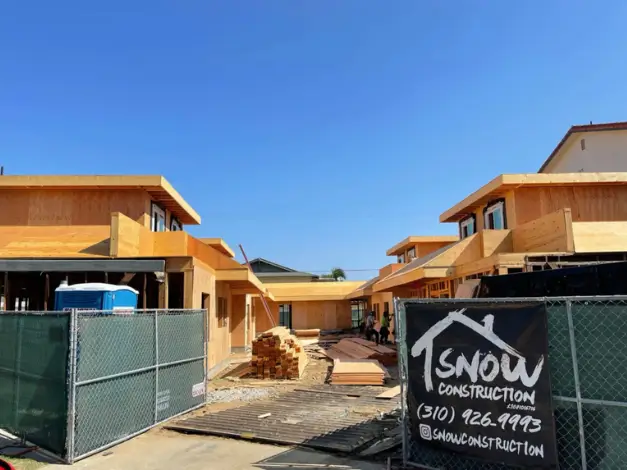
Before there's drywall, paint, or flooring, there's construction framing - the wood skeleton that holds everything up. Studs, beams, joists, and trusses. It's not a glamorous part of a build, but it's the part that determines whether the rest of the project even has a chance. Mess up the framing, and no number of nice finishes will fix a house that isn't structurally sound underneath.
That's the piece a lot of homeowners overlook. They're picking out countertops before they've even thought about who's framing the walls.

Residential Framing Contractor: Homes, Custom Work, and Flexibility
A residential framing contractor mostly works on single-family homes, townhomes, ADUs, and smaller multi-unit properties. Their bread and butter is residential wood framing - using lumber to build out walls, floors, and roof systems in a way that's efficient, budget-friendly, and doesn't take months to complete.
What stands out about residential work is how much customization goes into it. Homeowners want things their way - an extra window here, a vaulted ceiling there, a layout that doesn't quite match the "standard" floor plan. A solid residential wood framing crew is used to that. They're not just following a blueprint line by line; they're problem-solving in real time while keeping the structure sound.
These projects usually move fast, too. Depending on the size of the home, framing might wrap up in a week or two. The crews tend to be smaller and work closely with the homeowner or general contractor, adjusting as design decisions get finalized along the way.
If you're building a custom home, adding a second story, or putting up a backyard of ADU, this is who you're looking for.
Commercial Framing Contractors: A Different Scale Entirely
Commercial framing contractors operate in a whole different arena. We're talking about office buildings, retail centers, schools, apartment complexes - projects where the stakes, the code requirements, and the coordination involved are on another level.
Yes, commercial wood framing contractors still use wood a lot, especially mid-rise and multi-family jobs. But engineering gets a lot more involved. Fire codes, load calculations, ADA requirements, coordinating with a dozen other trades on a schedule that's usually tied to a leasing deadline - it's a different kind of pressure.
There's less room to freestyle on a commercial job. Everything is engineered ahead of time, permitted, inspected, and re-inspected. That's not a criticism of residential work - it's just a different job with different rules.
Where the Two Really Diverge
Size and scope. Residential jobs are usually one structure. Commercial jobs can span multiple buildings or entire complexes.
Materials. Both lean heavily on wood, but commercial wood framing contractors often bring in engineered lumber and steel reinforcement to handle longer spans and heavier loads.
Codes and inspections. Commercial construction framing tends to face more layers of regulation than a typical residential building.
Crew size. Commercial jobs generally need more hands and heavier equipment just to keep pace with the scope.
Who they answer to. A residential framing contractor usually talks directly to a homeowner. A commercial framing contractor is usually coordinating with developers, project managers, and a handful of other subcontractors all at once.
So Which One Do You Actually Need?
If you're building, renovating, or adding onto a house - or putting up an ADU - you want a residential framing contractor who knows residential wood framing well enough to take a blueprint and turn it into a home people will actually live comfortably in.
If you're developing something bigger - retail, office, multi-unit - you need commercial framing contractors who are set up to handle the scale and the code complexity that comes with it.
Hiring the "wrong" type usually isn't a safety issue so much as a mismatch problem. Slower timelines, unfamiliarity with the specific codes your project needs, a crew that's either too big or too small for the job. Getting the right fit from the start just saves everyone a headache
Final Thoughts
Whether it's a custom home or a full commercial build, the framing contractor you choose sets the tone for everything after it. Knowing the difference between residential and commercial framing isn't just a technicality - it's really the first decision that decides how smoothly the rest of the project goes.
Frequently Asked Questions
What exactly is framing in construction?
Framing is the structural skeleton of a building - the wood or steel network that holds up floors, walls, and roofs before anything like drywall, siding, or roofing goes on.
What is rough framing, and why does it matter?
Rough framing is the first structural phase - walls, floor systems, roof trusses - built before electrical, plumbing, and insulation start. It matters because everything downstream depends on it. Fixing a framing mistake later is far more expensive than getting it right the first time.
Is residential wood framing really different from commercial wood framing?
Yes. Residential wood framing usually sticks to standard lumber sizing for single-family homes. Commercial wood framing contractors are more likely to work with engineered lumber, longer spans, and stricter fire and load requirements.
Why hire a residential foundation and framing contractor together instead of separately?
It keeps the whole project on one timeline instead of two. Less back-and-forth between trades, fewer scheduling gaps, and usually a lower overall cost than managing a foundation contractor and a framing contractor as two separate hires.