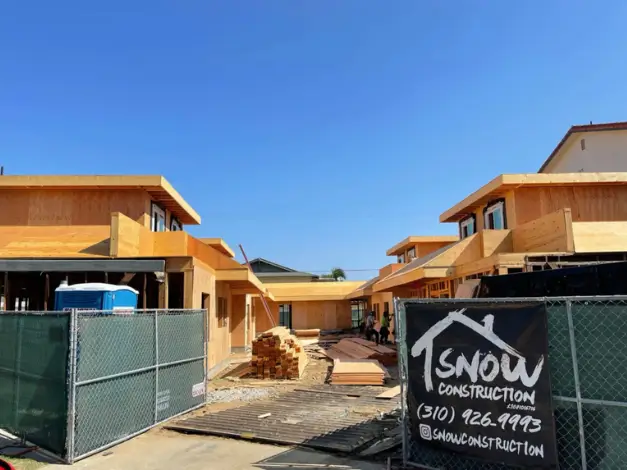
Choosing the right residential framing contractor in Los Angeles means verifying these quick checklists, make sure they:
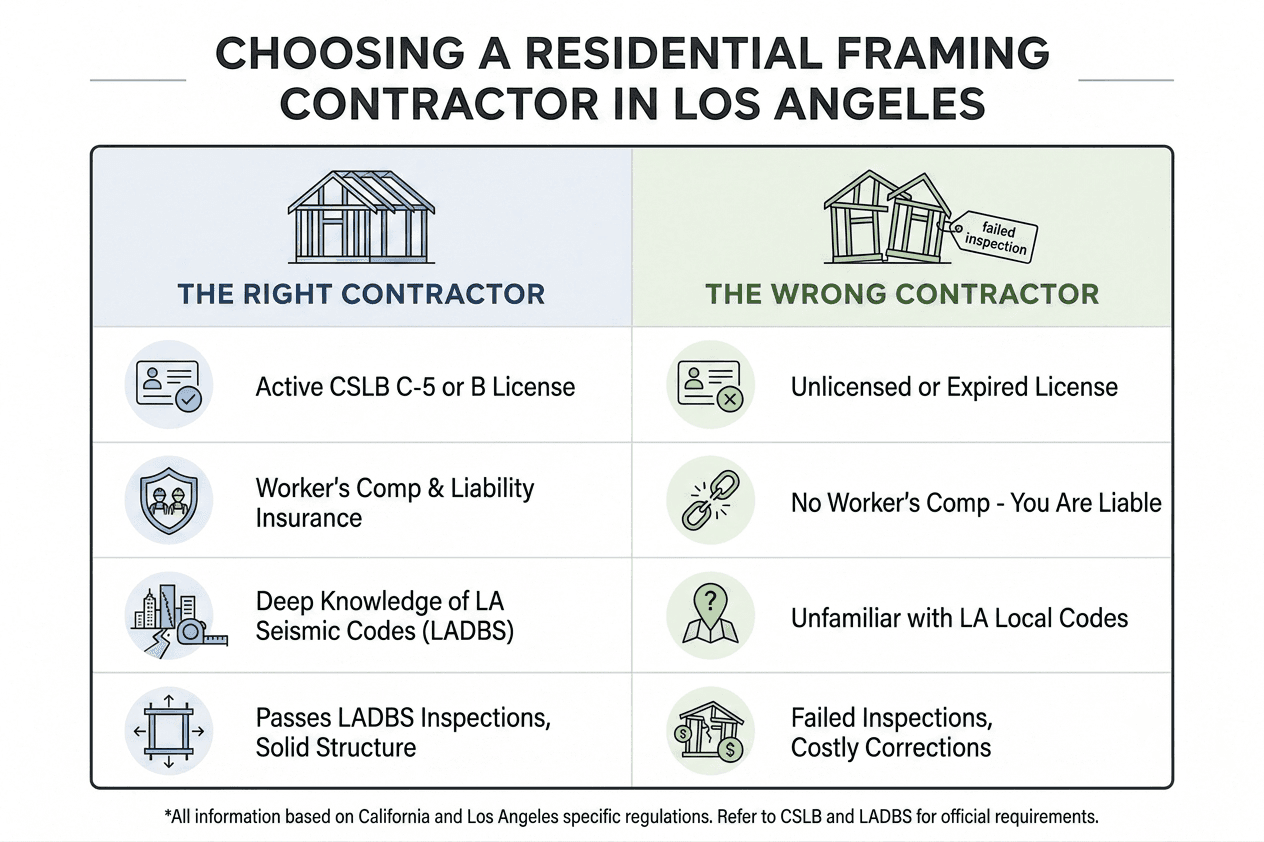
Hold an active California CSLB C-5 or B contractor license
Carry general liability and workers' compensation insurance
Have experience completing residential framing projects in Los Angeles
Understand California seismic building codes and LADBS requirements
Provide a detailed written estimate with labor, materials, and timeline
Can share recent client references and completed project examples
Pull all required permits and coordinate inspections
Clearly explain how change orders and unexpected costs are handled
Taking a few minutes to verify these details can help you avoid costly mistakes, project delays, and structural issues later.
Why Does Choosing the Right Framing Contractor Matter So Much?
The framing stage is the most structurally critical phase of any home build or renovation. A single mistake in wood house framing - a misaligned load-bearing wall, incorrect joist spacing, or improper shear panel installation - can compromise the entire structure and cost tens of thousands of dollars to correct after drywall goes up.
In Los Angeles specifically, the stakes are higher than almost anywhere else in the country. California's seismic zone requirements, Title 24 energy codes, and local LA Department of Building and Safety (LADBS) inspections mean your framing contractor needs to know local code inside and out - not just general residential construction.
What Happens If You Hire the Wrong Framing Contractor?
Hiring an underqualified framing contractor leads to failed inspections, costly structural corrections, and project delays that cascade through every trade that follows. In worst-case scenarios, improper framing in an earthquake-prone region like Los Angeles can create genuine safety hazards that don't appear until years after construction is complete.


What Qualifications Should a Residential Framing Contractor Have?
A qualified residential framing contractor in California must hold an active C-5 (Framing & Rough Carpentry) or B (General Building) contractor license issued by the California Contractors State License Board (CSLB). They should also carry general liability insurance and workers' compensation coverage - both are non-negotiable.
Here's exactly what to verify before signing any contract:
Is the Contractor Licensed by the CSLB?
Every legitimate residential framing contractor operating in California must be licensed through the CSLB. You can verify any contractor's license status, expiration date, and complaint history for free at cslb.ca.gov - this takes less than two minutes and should always be your first step.
What to check: Active license status, correct license classification (C-5 or B), no unresolved complaints or disciplinary actions.
Do They Carry the Right Insurance?
Your framing contractor must carry both general liability insurance and workers' compensation insurance before a single worker sets foot on your property. Without workers' comp, you can be held personally liable if a worker is injured on your job site - regardless of fault.
What to ask for: A certificate of insurance naming you as an additional insured, with coverage amounts clearly listed. Call the insurance provider directly to confirm the policy is active.
Do They Have Specific Los Angeles Experience?
General construction experience is not the same as Los Angeles-specific experience. LA's soil conditions, hillside grading requirements, fire zone classifications, and LADBS permitting process are distinct from other California markets. A contractor who has pulled permits and passed inspections in LA before will navigate your project dramatically faster and more reliably than one who hasn't.
What to ask: "How many projects have you completed in Los Angeles County in the past three years? Have you worked with LADBS inspectors before?"
How Much Does Framing a House Cost in Los Angeles?
Framing a house in Los Angeles typically costs between $7 and $16 per square foot for standard wood house framing, though complex designs, hillside lots, and high-end materials can push that figure higher. For a 2,000 square foot home, expect a total framing cost somewhere between $14,000 and $32,000 depending on scope and site conditions.
According to the National Association of Home Builders, framing accounts for approximately 15-20% of total new home construction costs - making it one of the largest single line items in any residential build budget.
What Factors Affect the Cost of Wood House Framing?
Several variables directly impact how much framing a house costs in the Los Angeles market:
Square footage and story count - More square footage means more material and labor. Two-story homes cost more per square foot to frame than single-story because of the added complexity of floor systems and stairwell framing.
Lumber prices - Wood house framing costs fluctuate significantly with lumber markets. Get bids during a period of price stability if possible, and ask contractors how they handle mid-project material cost changes in their contracts.
Design complexity - Open floor plans with long spans, vaulted ceilings, custom roof lines, and cantilevered sections all increase framing costs. Simple rectangular footprints are the most economical to frame.
Lot conditions - Hillside lots in areas like Silverlake, Echo Park, or the Hollywood Hills require engineered framing solutions that flat-lot projects don't. Expect a meaningful cost premium on sloped sites.
Permit and inspection fees - LADBS permit fees vary by project valuation. Budget these separately from your contractor quote - they're your responsibility as the homeowner and typically run $1,500-$5,000+ for new residential construction.
How Do You Compare Framing Bids Accurately?
Never compare framing bids on total price alone. Two bids that look similar can represent dramatically different scopes. When reviewing bids from house framing contractors, confirm each one includes:
Lumber species and grade specified
Labor and material costs broken out separately
Whether the bid includes beam installation or only standard stick framing
How change orders and material cost fluctuations are handled
Timeline with milestone dates tied to inspection stages
What Should You Look for in a Contractor's Past Work?
Strong residential framing contractors will have a portfolio of completed projects, verifiable references from recent clients, and a track record of passing LADBS framing inspections on the first submission. These aren't nice-to-haves - they're the minimum standard.
How Do You Evaluate a Framing Contractor's References?
Ask for references from projects completed within the last 18 months, and actually call them. Most people don't - which is exactly why the ones who do get dramatically better information.
When you speak with a reference, ask these specific questions:
Did the framing pass inspection on the first submission?
Were there any structural corrections required after framing was complete?
Did the contractor stick to the quoted timeline?
How did they handle unexpected issues on site?
Would you hire them again?
What Red Flags Should You Watch for When Vetting Contractors?
Watch for these warning signs during the vetting process:
No physical business address - A contractor operating from a P.O. box or no listed address is a significant risk
Requests for large upfront cash payment - California law limits contractor deposits to 10% of the total contract or $1,000, whichever is less
Reluctance to pull permits - Any contractor who suggests skipping permits in Los Angeles is exposing you to code violations, fines, and future sale complications
No written contract - Verbal agreements have no legal standing; everything must be in writing
Pressure to sign immediately - Legitimate contractors don't need to pressure you
How Do You Find Qualified House Framing Contractors in Los Angeles?
Finding qualified residential framing contractors in Los Angeles requires looking in the right places and knowing what to filter for before you even make contact.
Start here:
CSLB's online contractor search - Filter by license type (C-5 or B) and city to find licensed contractors actively operating in your area. This is the most reliable starting point because it immediately eliminates unlicensed operators.
General contractor referrals - If you're working with a GC on a larger project, ask for their preferred framing subs. Subcontractor relationships are built on performance - a GC's recommendation carries real weight.
Local building supply yards - Lumber yards that supply professional contractors often know which framing crews have strong reputations in the local market. It's an underused source of reliable referrals.
LADBS permit records - You can search public permit records to find contractors who have actively pulled framing permits in Los Angeles. It's a concrete, verifiable signal of experience in the local market.
Get a minimum of three bids. Not to find the cheapest option - but to understand the market rate, identify outliers in either direction, and get a feel for how each contractor communicates and thinks about your project.
Frequently Asked Questions
What are residential framing contractors responsible for?
Residential framing contractors are responsible for constructing the structural skeleton of a home - including exterior walls, interior load-bearing walls, floor systems, roof trusses, and stairwell framing. In Los Angeles, they must also ensure all framing meets California seismic code and local LADBS requirements before inspection, as structural errors at this stage are extremely costly to correct later.
How long does wood house framing take in Los Angeles?
For a standard single-family home, wood house framing typically takes two to four weeks from start to inspection, depending on square footage, design complexity, and crew size. Hillside lots, custom roof lines, and permitting delays can extend that timeline. Always ask your contractor for a milestone schedule tied to specific inspection stages before work begins.
How much does framing a house cost for a 2,000 sq ft home in LA?
Framing a 2,000 square foot home in Los Angeles typically costs between $14,000 and $32,000 for labor and materials, based on a rate of $7-$16 per square foot. Hillside lots, complex rooflines, and premium lumber grades will push costs toward the higher end. Get at least three itemized bids from licensed house framing contractors before budgeting your project.
What is the difference between a C-5 and a B contractor license for framing?
A C-5 license specifically covers framing and rough carpentry work, while a B (General Building) license covers broader construction scope including framing. Both are valid for residential framing projects in California. The key is that whoever holds the license on your project must be actively licensed, insured, and in good standing with the CSLB - verify this at cslb.ca.gov before signing any contract.
Can I do residential framing without a permit in Los Angeles?
No - any structural framing work on a residential property in Los Angeles requires permits pulled through the LA Department of Building and Safety. Unpermitted framing work creates serious legal and financial exposure: it can result in stop-work orders, mandatory demolition of unpermitted work, fines, and complications when selling the property. Any contractor suggesting you skip permits should be disqualified immediately.
How do I know if a framing contractor understands LA seismic requirements?
Ask them directly to explain how they handle shear wall design, hold-down hardware, and engineer-stamped plans for seismic compliance. A qualified contractor will answer without hesitation and can point to past projects where their framing passed LADBS seismic inspections. If they're vague or dismiss the question, that's a clear sign they lack the LA-specific expertise your project requires.