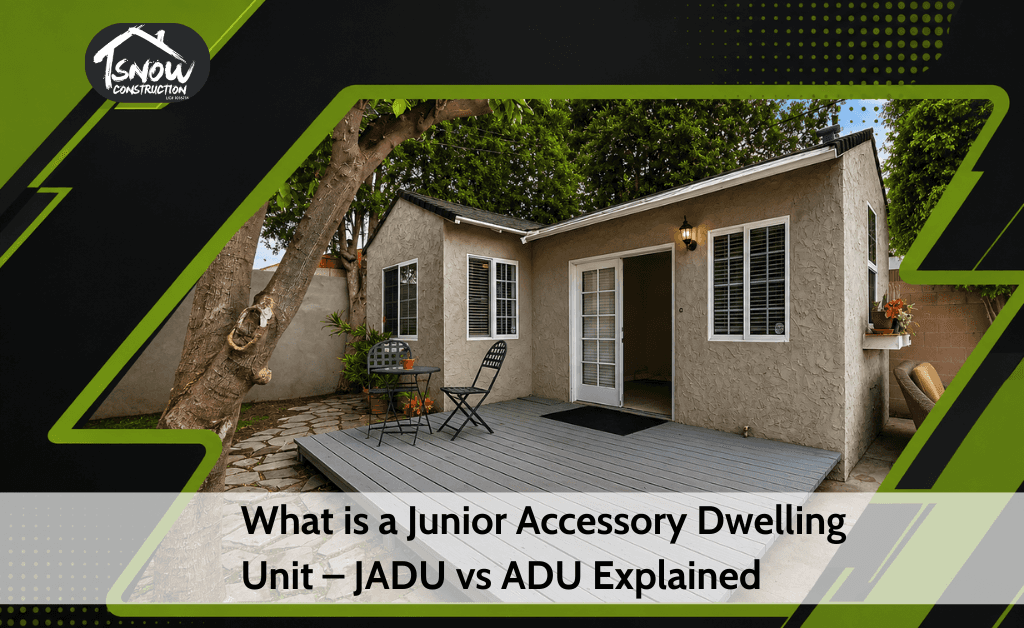
Look, housing's tight everywhere right now, but here in LA it's a whole different level. That's pushed a lot of homeowners to get creative with what they've already got. And one of the smartest little fixes out there? The Junior Accessory Dwelling Unit. Or JADU, if you want the short version. It's small, it's simple, and it's become the go-to for anyone digging into an accessory dwelling unit in Los Angeles who wants more room without tearing their whole house apart. So what is a JADU, really, and how's it different from a regular ADU? Let's get into it.
What is a JADU?
Picture a tiny, self-contained living space, 500 square feet tops, built right inside the home you already have. Most people carve theirs out of a garage, a spare bedroom, or an attic that's just sitting there collecting dust. You get a kitchenette, somewhere to sleep, and either your own bathroom or one you share with the rest of the house. It also has to have its own separate entrance. That's the piece that gives it that semi-independent feel, without you having to gut your entire home to pull it off.
Weighing your options for ADU granny flats? A JADU's honestly one of the easiest doors in. Need space for family? A place to put guests? Some rental income on the side? A JADU lets you use the square footage you're already sitting on instead of adding onto your home at all.
People also ask about JADUs:
What is the difference between a JADU and an ADU? Mostly size. A JADU maxes out at 500 square feet and comes from space you already have inside your home. An ADU can hit 1,200 square feet and might attach to your house or stand totally on its own.
Does a JADU need a separate entrance? It does, no way around it. That's what makes it semi-independent from the rest of the house.
Can I convert my garage into a JADU? You can, as long as it hits your size limits and local building codes. Honestly, garages and attics are two of the most popular spots homeowners pick.
What is a Junior ADU?
Pretty much the same idea. A Junior ADU is a small accessory dwelling unit, maxed at 500 square feet, built into the walls of the home you're already living in. Homeowners usually reconfigure an attached garage, an oversized bedroom, or a storage room to pull it off. You get a kitchenette and either your own bathroom or a shared one. It needs an exterior entrance too. That's the piece that makes it so useful for housing family or picking up a little rental income, all without adding a single square foot onto your house.
What is an ADU in California?
An Accessory Dwelling Unit, or ADU, in California is a fully independent living space you can add onto a residential property. It can be detached, attached to your primary home, or made by converting part of a structure that's already standing. Trying to decide between an ADU above a garage in Los Angeles and a fully detached build? Good news, they both fall under the same California ADU rules. Really just comes down to what your lot and your plans can handle.
Every ADU needs its own full kitchen, bathroom, and sleeping area. California's made a real push in recent years to make these easier to build, and that's opened up a lot more housing options across the state. For homeowners, that often means rental income or a comfortable spot for extended family. And honestly, across Los Angeles neighborhoods, ADUs and granny flats have become one of the most popular answers for adding real living space without buying a whole new property.
Types of ADUs
Detached ADUs: A standalone structure sitting on the same lot as your main house. You get the most privacy this way, and it honestly functions almost like a whole separate home.
Attached ADUs: Built right onto the main house. Think basement conversion, or an addition that stretches your existing living space a bit further out.
Interior ADUs: These live inside your home's existing structure, kind of like a Junior ADU. Whether one actually counts as a Junior ADU comes down to size and what's included inside it. A well-planned ADU above a garage in Los Angeles often lands right here too.
FAQs About Junior ADUs and ADUs in California
How is a Junior ADU different from a regular ADU?
A Junior ADU tops out at 500 square feet and gets built inside your home's existing structure. A regular ADU can be bigger, and it might stand alone or attach right onto the main house.
Do Junior ADUs need their own bathroom?
Nope, not required. A Junior ADU can have its own bathroom or just share one with the main house, whatever fits your layout best.
Can I rent out an ADU in California?
You sure can. Tons of homeowners rent theirs out for a little extra income, and it helps ease the local housing crunch too.
What are the requirements for a Junior ADU?
It has to sit inside your existing home, stay under 500 square feet, and include a kitchenette. It also needs its own entrance, but sharing a bathroom with the main house is totally fine.
Are there incentives to build ADUs in California?
There are, actually. The state's passed laws to take some of the headache out of ADU construction, including a simpler permitting process that's made ADUs and granny flats a lot more attainable for everyday homeowners.
Can I build a detached ADU in California?
Yes, and plenty of homeowners do exactly that. Detached ADUs give you more flexibility and more privacy than an attached build.
How long does it take to get permits for an ADU in California?
Depends on your city, but California law says local jurisdictions have to approve or deny an ADU permit within 60 days. So at least it can't drag on forever.

JADU vs ADU: Key Differences
Both add real living space to your property. But knowing how they differ makes it way easier to figure out which one actually fits what you need.
Size and Structure
JADU: Stays under 500 square feet and gets built inside the home you already own, usually by converting part of the main residence.
ADU: Can go up to 1,200 square feet and might be brand new construction, either detached or attached to your home. That's way more room to play with, design-wise.
Entrance and Independence
JADU: Needs its own separate entrance but can share bathroom facilities with the main house. Semi-independent, not fully independent, and that's kind of the whole point.
ADU: Also requires a separate entrance, but this one's built for fully independent living, its own kitchen, bathroom, and sleeping space, no sharing required.
Permitting and Regulations
JADU: Usually moves through a smoother permitting process since it's built inside something that already exists. Though your local jurisdiction might still tack on its own requirements, so don't skip that step.
ADU: California's worked to make ADU permitting easier statewide, but honestly, the rules still shift from city to city. Definitely check local zoning and building codes before you get too far into planning.
Benefits of Building a JADU or ADU
Both options bring real perks to homeowners, and honestly, to the whole neighborhood too:
Increased Property Value: A JADU or ADU can bump up your property's value and make it a lot more appealing to future buyers.
Additional Income: Rent one out and you've got a reliable stream of extra cash, month after month.
Multigenerational Living: Both setups let families stay close while everyone still gets their own space. No stepping on toes.
Efficient Land Use: JADUs and ADUs help you squeeze more out of the lot you already own, which is a smart move anywhere space is tight.
Addressing Housing Shortages: In markets where housing's stretched thin, JADUs and ADUs help stretch the supply just a little further.
Final Thoughts About JADU
Knowing what a JADU is and how it stacks up against a full ADU makes the whole decision a lot less overwhelming. Housing needs keep shifting across Los Angeles, and options like the Junior Accessory Dwelling Unit open the door to flexible living, some extra income, and smarter use of the space you're already sitting on. Whether you're leaning toward a JADU, a full ADU, or an ADU above a garage in Los Angeles, you've got solid options here for adding real value to your property.
Snow Construction is your go-to team for accessory dwelling units and granny flats in Los Angeles. Take a look at our work designing and building beautiful, functional granny flats built around your property.
Contact us today to start your journey toward adding value and flexibility to your home.