Choosing the right room addition contractor determines whether your project finishes on time or drags on for months. This guide covers what to look for in home addition contractors, key questions to ask, red flags to avoid, and why Snow Construction focuses on realistic timelines and transparent communication.
Choosing the right room addition contractor comes down to three things: proven experience with projects like yours, a clear written timeline before work begins, and honest communication once the job starts. Get those three rights, and your addition is far more likely to wrap up on schedule and on budget. Get them wrong, and even a simple room addition can drag on for months.
If you're at the stage of comparing quotes and trying to figure out who's going to show up, stay on schedule, and not disappear halfway through the drywall phase - this one's for you.
Why Timelines Slip More Often Than You'd Think
Room additions look straightforward on paper. Add a foundation, frame the walls, tie in the roofline, run electrical and plumbing, finish the interior. Timelines slip constantly, and it's rarely because of the weather or "supply chain issues" contractors love to blame.
Most delays trace back to one root cause: the contractor underestimated the project, overcommitted to other jobs, or didn't plan the permitting process properly. This is exactly why the contractor you choose matters more than the price you're quoted. A slightly higher bid from home addition contractors who actually manage their schedules well will almost always save you money and stress in the long run.
What Separates a Reliable Contractor From a Risky One
Not every general contractor is set up to handle additions well. Room additions involve structural work, permitting, and matching new construction to an existing home - a different skill set than, say, a kitchen refresh. Here's what to actually look for.
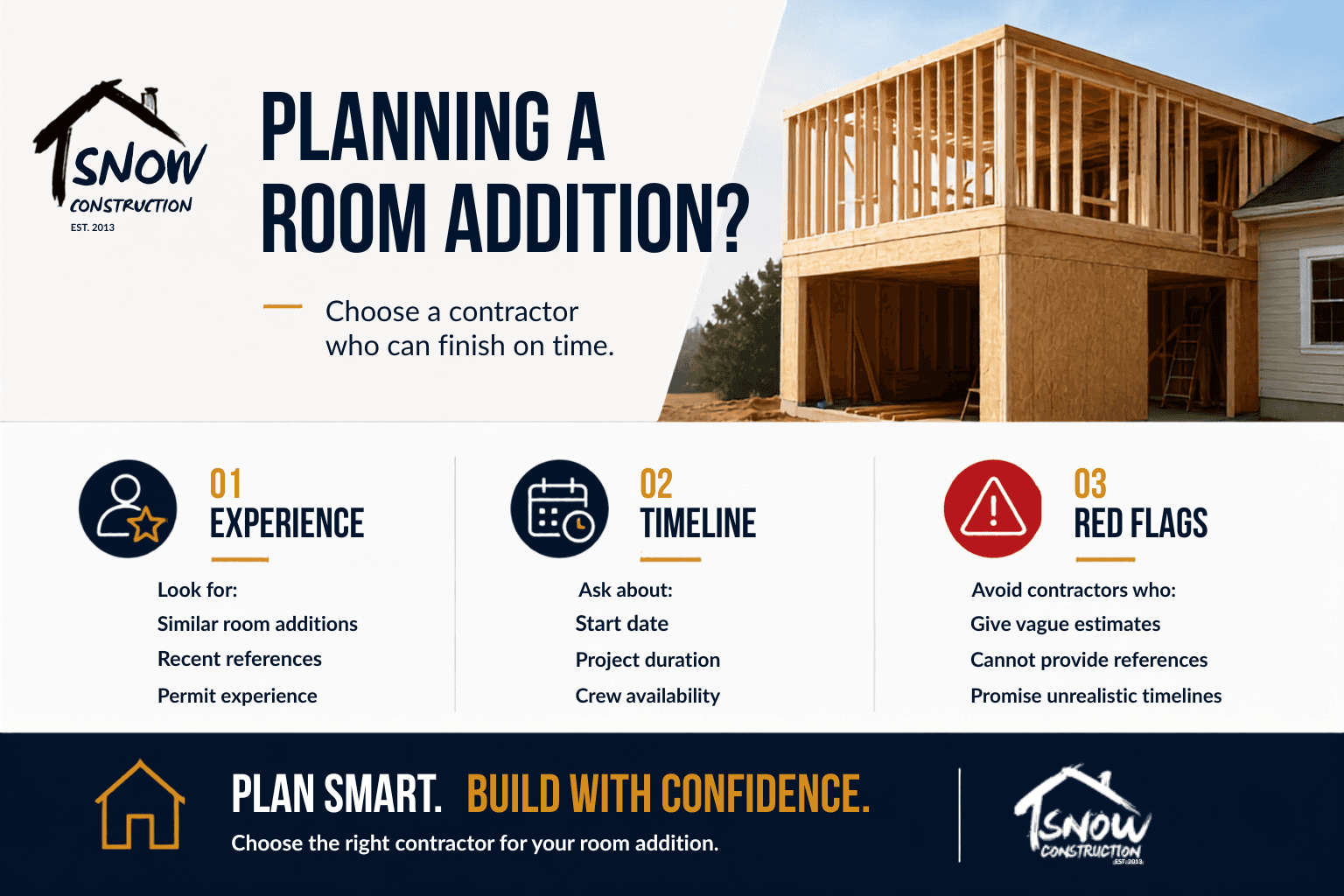
A specific, in-writing timeline. Ask any contractor for room addition work to give you a phase-by-phase schedule - permitting, foundation, framing, rough-ins, inspections, finishing. If they can only give you a vague "8 to 12 weeks," that's a sign they haven't fully scoped the job.
Permit experience in your city. Permitting delays is the number one cause of stalled projects. A contractor who regularly pulls permits in your area will already know the local inspection of quirks and won't be learning the process on your dime.
References from recent, similar projects. Not testimonials from five years ago - recent ones. Ask specifically: "Did this project finish when they said it would?" That single question tells you more than anything else on a website.
Crew stability. Contractors who keep the same core crew across projects tend to finish faster and with fewer errors, simply because the team already knows how to work together.
Room Addition vs. ADU: Know What You're Actually Building
Not every "extra space" project is the same. A traditional room addition attaches directly to your existing home - a new bedroom, office, or family room built off the current footprint. An accessory dwelling unit (ADU) is a separate, self-contained living space, often used for rental income, aging parents, or adult kids moving back home.
If you're leaning toward the second option, you'll want to specifically search for an ADU builder near me, since ADU projects come with their own permitting rules, utility requirements, and design codes that differ from a standard addition. Not every room addition contractor handles ADUs, and not every ADU builder is equally comfortable with attached additions - so be upfront about which one you're actually planning when you start getting quotes.
Questions to Ask Before You Sign Anything
Before you hire, get direct answers to these:
What's your realistic start date, and what could push it back?
How many other active projects will your crew be juggling at the same time as mine?
Who handles permitting, and how long does it typically take in this city?
What happens if we hit an unexpected structural issue mid-project?
Can I get a written payment schedule tied to project milestones, not just calendar dates?
A contractor who answers these clearly, without hedging, is usually one who's done this enough times to know exactly where projects tend to go sideways - and how to avoid it.
Red Flags Worth Taking Seriously
A few warning signs tend to predict late projects almost every time: vague or verbal-only estimates, reluctance to share references, a rock-bottom bid that's far below everyone else's, and a "we'll figure out the permit stuff later" attitude. Any room addition contractor who brushes past these details in the sales conversation is telling you, indirectly, how they'll handle the actual build.
Final Thoughts
A room addition is a big investment, and the contractor you choose determines whether that investment feels smooth or stressful. Look past the sales pitch, ask the direct scheduling and permitting questions, and choose a team that treats your timeline as seriously as you do.
Frequently Asked Questions
How long does a typical room addition take?
Most single-room additions take roughly 10 to 16 weeks from permit approval to final inspection, though size, design complexity, and city permitting speed all affect the timeline.
What's the difference between a room addition contractor and an ADU builder?
A room addition contractor typically builds attached spaces connected to your existing home, while an ADU builder specializes in separate, code-compliant living units with their own entrance, kitchen, and utilities.
Can I speed up my project by hiring multiple contractors for different phases?
Generally, no. Splitting a project across multiple contractors usually creates more delays, not fewer, because scheduling and accountability get harder to manage. One dedicated contractor for room addition work, overseeing the whole build, tends to finish faster.
Should I choose the contractor with the lowest bid?
Not automatically. The lowest bid often means shortcuts somewhere - either in materials, permitting, or crew experience - all of which can extend your timeline in the end.